Not a market report — a living map. For each sector we track the companies, suppliers, capital, research institutions, infrastructure, incentives, and the policy bodies that move them, wired together into one graph you can interrogate: who to recruit, what to offer, who they depend on, and when the windows open. Aerospace and nuclear are live today; biodefense & biomanufacturing is being built on the same method.
Every atlas is built the same way — researched from official sources, adversarially verified, and wired into one graph — so a new sector is a research campaign, not a rebuild.
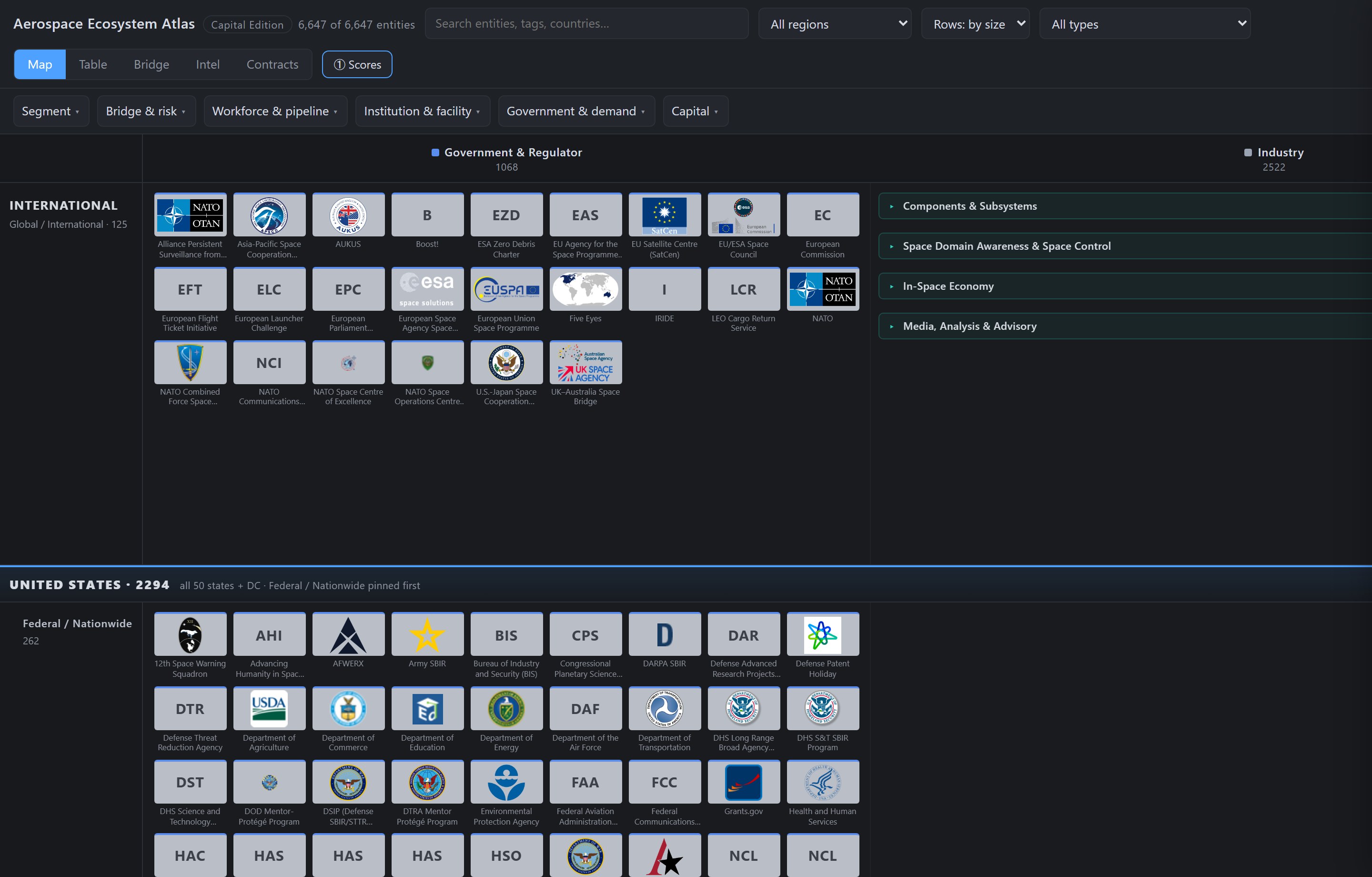
6,600+ organizations across 120+ countries — launch, satellites, components, space data, capital, incentives, and live program windows. Regional and Capital Editions.
3,800+ organizations across 100+ countries: power plants, fission and fusion developers, the fuel cycle, suppliers, research reactors, regulators and the defense nuclear enterprise, mapped from open, official sources.
Defense and public-health agencies, manufacturing institutes, CDMOs, synthetic-biology companies, and the investors and talent pipelines around them.
For students: internships, fellowships, scholarships and programs across the national security community, with eligibility, pay and deadlines checked against official pages.
FOR STUDENTS →Industry, capital, government, research, infrastructure, programs — classified into each sector's working segments: launch to space data in aerospace, fission to fusion in nuclear.
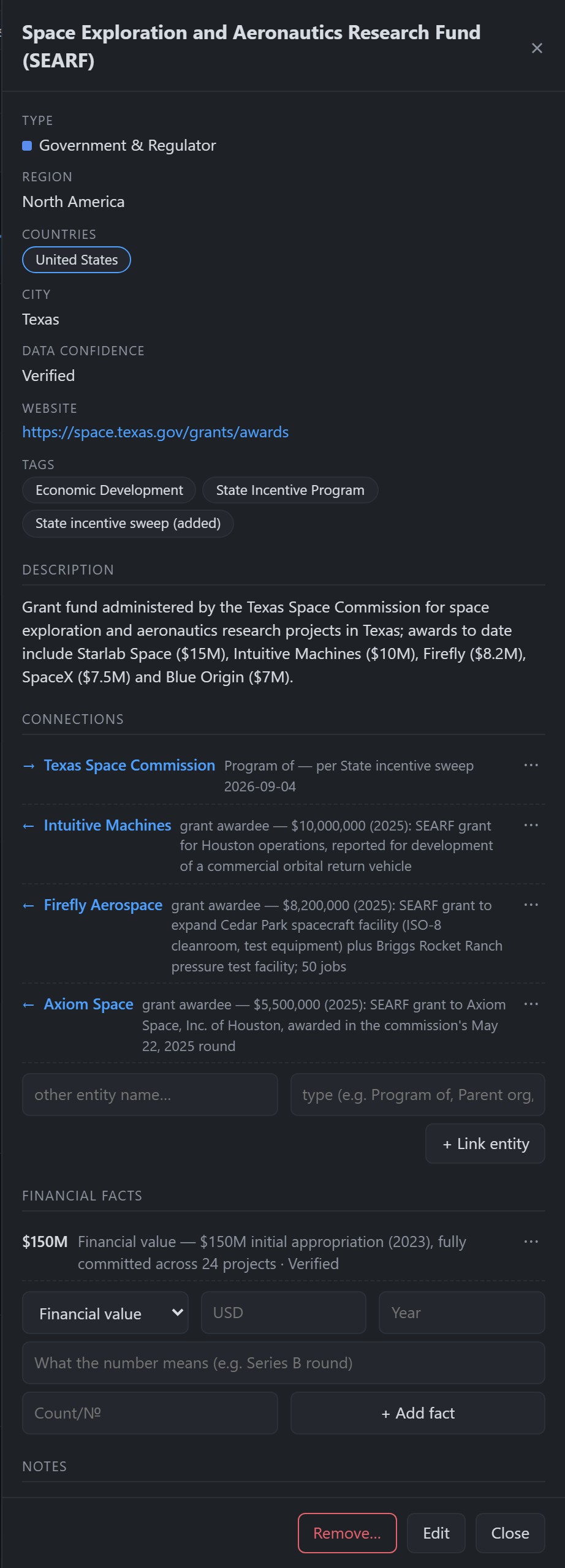
Supply relationships, ownership, investment, membership, and program participation — the dependencies that decide outcomes.
Live instruments with stated rates, caps, and eligibility across the US and allied markets — a comparables shelf for recruitment offers and site negotiations.
Solicitations, on-ramps, cohorts, and budget events with dates taken only from official pages — so outreach lands when decisions are being made.
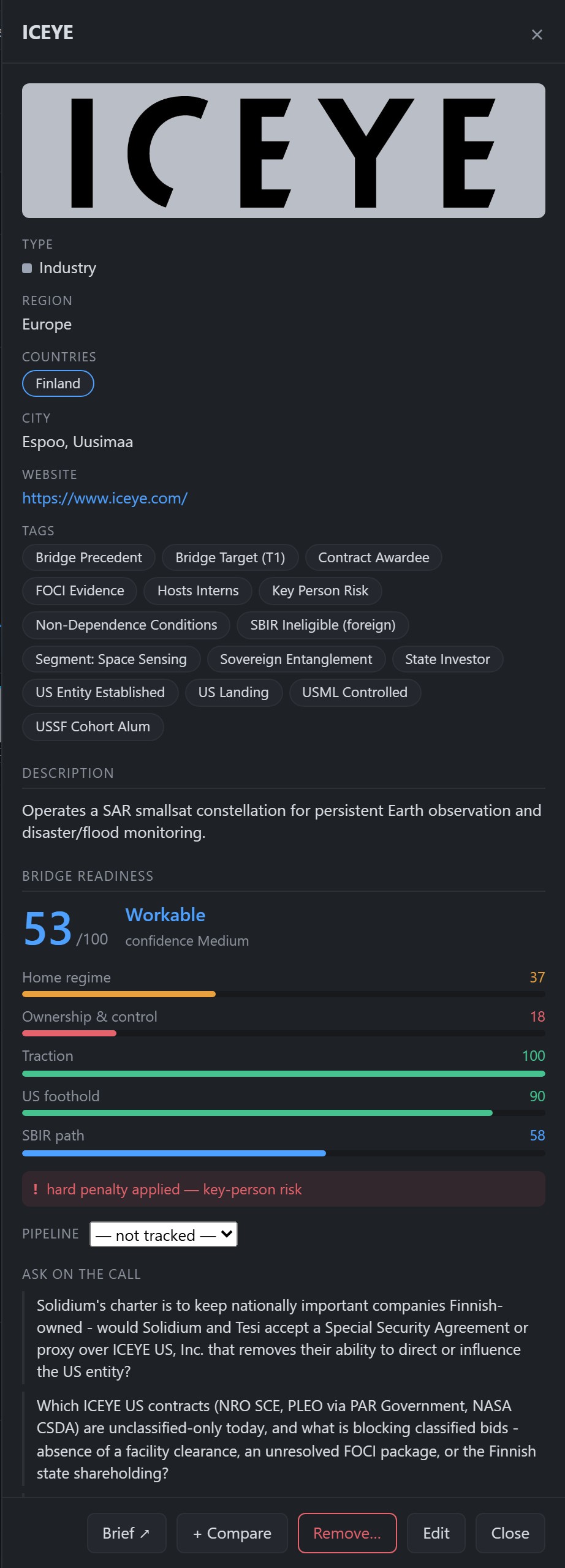
Companies scored on technology readiness, operating heritage, US foothold, and demand fit — a ranked answer to "who should we call Monday?"
The offices that shape national industrial strategy — agency heads, ministers, council chairs — tracked as positions, with current holders verified.
Companies that collapsed, what support they had and lacked, and what the collapse cost — the evidence base for why ecosystem support exists.
Government employment and wage data by state and occupation, aligned to the map — the labor answer behind every siting question.
Every record enters the atlas through the same discipline: the page behind it was fetched and read, an independent verification pass tried to refute it, and what survived carries its source and date. Program windows are never inferred. Removals are logged, not hidden.
Each sector atlas ships in two editions — available today for aerospace. Both are delivered as a signed-in web application, refreshed from the research base. Engagements add custom depth: your region's comparables, your target list diligenced, your windows watched.
The working map for development organizations: every entity, connection, incentive instrument, and timing window, with maturity, US-presence, and readiness scoring. The analytical layers are held back.
Everything the practice holds: bridge scoring with factor breakdowns, ownership and entanglement analysis, export posture, the intel views, and the generated diligence questions — the complete decision instrument, read-only under your own login.